
May 25, 2021
Culture Corner: Around the World in 5 Beers
“Beer is the basis of modern static civilization,” says Charlie Bamforth, Professor of Brewing Science at University of California, Davis. He adds, “Before beer was discovered, people used to wander around and follow goats from place to place. And then they realized that this grain [barley] could be grown and sprouted and made into a bread and crumbled and converted into a liquid which gave a nice, warm, cozy feeling. They stayed put while the grain grew and while the beer was brewed. And they made villages out of their tents. And those villages became towns, and those towns became cities.”
Fast-forward to the 21st century, where beer is making massive waves on an economic scale. The Beer Institute says that just in the U.S. alone, the beer industry supported more than 2.1 million jobs and contributed more than $328 billion to the economy in 2018.
While the frothy beverage’s historical and economic impact is impressive, what’s even more interesting are the cultural differences all over the globe. So, whether or not you’re an avid beer drinker, we invite you to join us on a tour of brews from around the world.
Plzeň, Czech Republic
Pilsner Urquell | Pilsner Urquell Brewery
The Czech Republic consumes more beer (or “pivo” as they call it) per capita than anywhere else in the world, at 188.6 liters per person per year. You’ll actually spend more money on a bottle of water there than you will on a mug of beer. Pilsner Urquell, also known as the “original” pilsner, has been brewed the same way since 1842. It’s essentially what all light-colored lagers and pilsners dream of becoming, and what brewers aim to create.
Fun fact: There are three ways to pour a Pilsner Urquell, one of which is a mug filled almost entirely with sweet, thick foam!
Flavor: Natural carbonation makes this beer refreshing and crisp, while subtle caramel notes peak through with a clean and hoppy finish.
Food Pairings: Depending on the pour, hearty meals, rich foods like duck, or sweet desserts like kolaches!
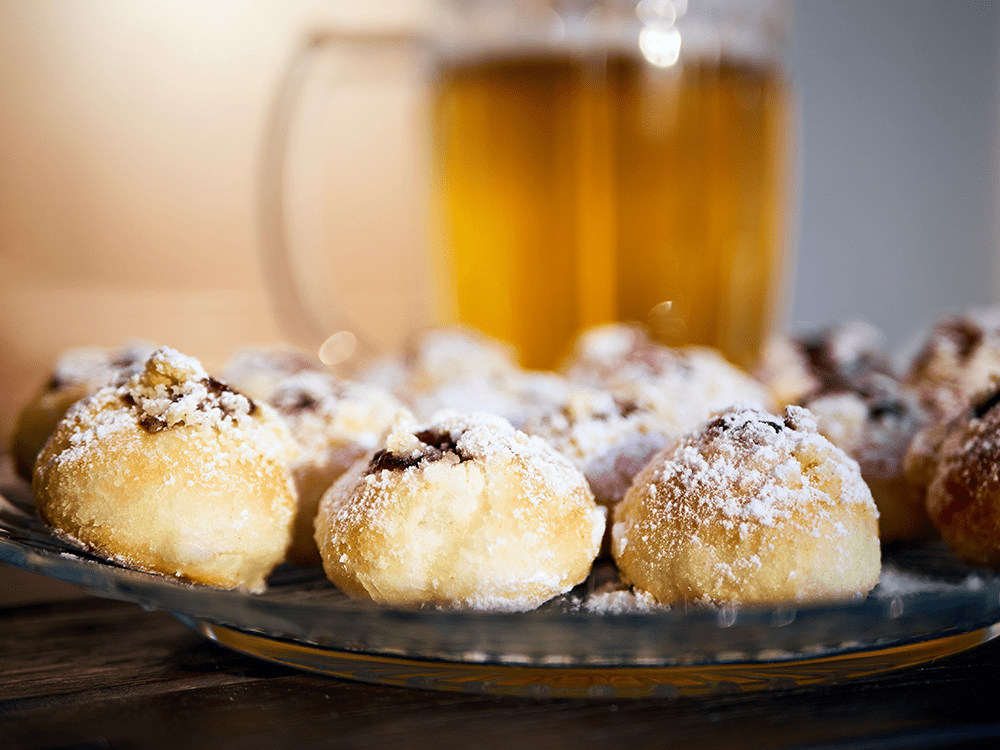 Try pairing your Pilsner Urquell with this yummy Kolache recipe!
Submitted by: Nicole Schultz | Lodge No. 68 | Nebraska
3 cups lukewarm milk
½ cup potato flakes
3 tablespoons dry yeast
3 eggs, beaten
1 cup oil
2 teaspoons salt
7-8 cups flour
½ cup sugar
Mix milk, sugar, potato flakes, yeast, and 1 cup flour. Let stand until foamy. Add beaten eggs, oil, salt, and flour. Beat until smooth. Let rise in warm place until double. Form into buns and, when raised, make indentations in bun. Fill with cherry, prune, or poppy seed filling. Let set 5-10 minutes and bake in 400 degree oven for 15-20 minutes until lightly brown. Let cool, pour yourself a mug of Pilsner Urquell, and enjoy!
Westmalle, Belgium
Westmalle Tripel | Westmalle Trappist
In 1793, a group of monks established a farm in Westmalle after fleeing their abbey during the French Revolution. Fifty years later, they started brewing beer to feed their community at the Abbey of Westmalle. Nowadays, they brew beer to support themselves and to give back to charitable causes. The Westmalle brewery is home to the “Mother of all Tripels”: the Westmalle Tripel. The term “Tripel” refers to the fact that three times the ingredients are used compared to the original Westmalle Trappist beer.
Flavor: This Tripel is smooth and creamy with rich malt sweetness, some fruity tones, and a bit of heat.
Food Pairings: Pungent cheeses, assorted appetizers, and fresh steamed asparagus.
St. Paul, Minnesota
651 Tyga Bite Tsov Tom | Vine Park Brewing Company
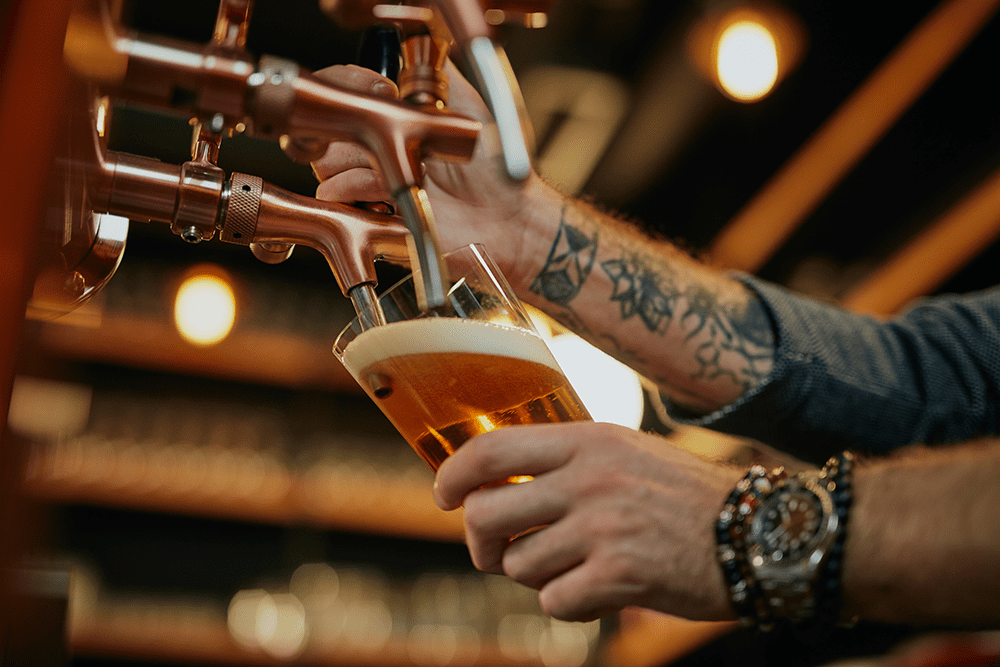 Brewed in St. Paul, Minnesota, Vine Park Brewing Company is the first Hmong-majority owned brewery in the United States and the only Hmong owned brewery in the world! It’s also the only brewery in the Midwest where you can brew your own beer and make your own wine.
Flavor: This American light lager is sweeter than your typical lager, and its light and bright body followed with a crisp clean finish makes for easy drinking.
Food Pairings: Spicy meals.
Dublin, Ireland
Guinness Draught | Guinness
Guinness Draught was created in 1959 to celebrate the 200 year anniversary of Arthur Guinness signing his 9,000 year lease at the St. James’s Gate Brewery. This was the first beer to use a nitrogen and carbon dioxide pairing. The added nitrogen gives the beer a creamy and velvety texture, with less acidity due to the lack of carbonation.
If you take a look at your Guinness Draught while it’s settling, you’ll see the bubbles are actually falling instead of rising, a fun effect of the added nitrogen!
Flavor: This dark Irish dry stout is a great balance of bitter and sweet, with a creamy and velvety texture.
Food Pairings: Salty foods or add ice cream to make a yummy float.
San Diego, California
Alesmith IPA | Alesmith Brewing Company

There’s a rumor that IPAs were created in the 1700s because no other beer could survive the long journey from England to India. While many beer historians have debunked this myth, there’s not much concrete evidence out there to determine the real reason. What is known, however, is that hops act as a preservative. Adding extra hops to the beer ensured that it would not only survive long trips, but actually improve in flavor over time.
Flavor: This classic IPA stands its ground with fruity hop undertones, a healthy malt backbone, and a smooth, bitter finish.
Food Pairings: Bleu cheese or spicy dishes.
For more articles exploring cultures around the world, visit the Culture Corner section of our blog or check out our BetterLife Member Magazine!